

If you’ve ever been on the receiving end of those tiny, razor-sharp puppy teeth, you know just how persistent and painful puppy biting can be! But don’t worry—it’s completely normal. Puppies explore the world with their mouths, and biting is a natural part of their development.
In this blog, we’ll break down why puppies bite, how to teach your puppy not to bite, and provide a step-by-step guide to help you stop those playful nips—without harming your bond. Plus, we’ll show you how The Canine Hub’s PupStar classes can turn your pup into a well-mannered superstar!🚀
Want a step-by-step guide you can keep handy? Download our FREE ebook: ‘The Puppy Biting Survival Guide’ for expert tips and solutions! Click here to get your free copy.
Why Do Puppies Bite?
Puppies bite for several reasons, including:
1. Teething Troubles
Just like human babies, puppies go through a teething phase where their gums feel sore, and chewing relieves discomfort. This typically happens between 3 to 6 months of age.
2. Playfulness and Exploration
Puppies learn about the world by mouthing and biting everything—including you! In a litter, they bite their siblings, and when one stops playing, they learn that biting too hard ends the fun. Without littermates, they rely on us to teach them.

3. Overstimulation or Frustration
When puppies get too excited or frustrated, they may bite as a way to release energy. This is common during playtime or when they’re trying to get your attention.
4. Learning Social Skills
Puppies need to learn bite inhibition, which means controlling the force of their bite. This skill helps prevent accidental injuries when they grow into adults.
How Do I Teach My Puppy Not to Bite Me?
The key to stopping puppy biting is consistent, positive training. Here’s a step-by-step guide to help you teach bite manners effectively.
Step 1: Redirect to a Toy
If your puppy bites your hand, immediately redirect them to a chew toy or tug toy. This teaches them that biting hands is not acceptable, but biting toys is.

Step 2: Reward Gentle Behaviour
Puppies learn best through positive reinforcement! When your puppy licks or plays gently, reward them with praise, treats, or playtime. This encourages them to repeat good behaviour.
Step 3: Avoid Rough Play
Games like wrestling or letting your puppy chase your hands encourage biting. Instead, use structured play like fetch or tug-of-war with clear rules.
Step 4: Teach “Leave It” and “Gentle” Cues
At The Canine Hub PupStar classes, puppies learn impulse control through cues like “Leave it” and “Gentle”. These cues teach them to be more mindful of their mouths.
Step 5: Give Plenty of Chew Toys
If your puppy is teething, provide safe chew toys like frozen Kongs, rubber chews, or soft teething toys. This prevents them from using your hands as a chew toy!
Step 6: Use a Calm Timeout if Needed
If your puppy is overly excited and biting excessively, calmly remove your attention. Stop playing, stand up, and give them a moment to settle. Once they are calm, resume interaction.
Step 7: Be Consistent
Everyone in the household should respond the same way to biting. If one person lets it slide, your puppy will get mixed signals and keep biting.
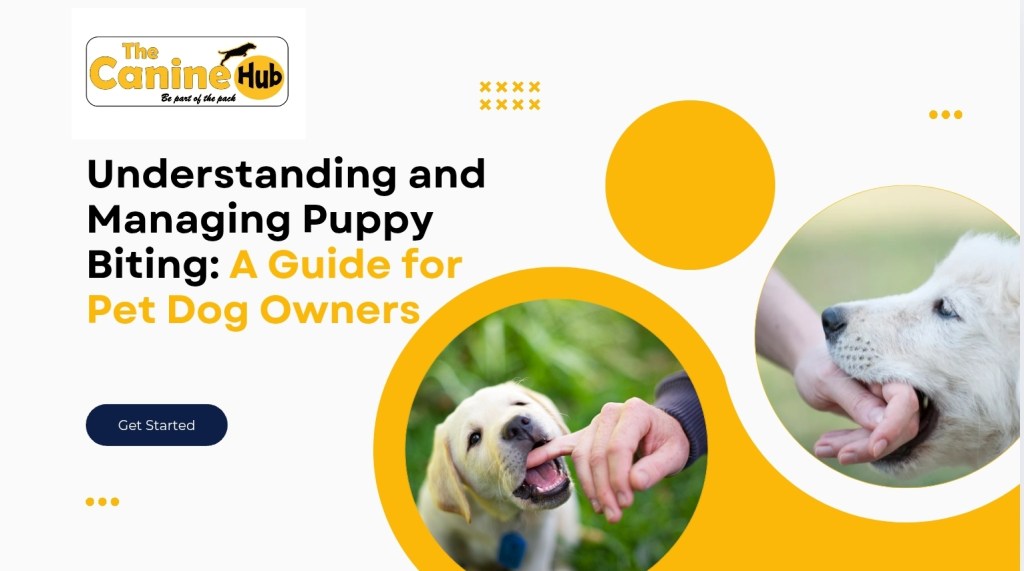
✨ Need more help? Our free ebook, ‘Understanding and Managing Puppy Biting’ has everything you need to stop those sharp little teeth in their tracks!
Why The Canine Hub PupStar Classes Are a Game-Changer
If you’re struggling with puppy biting, The Canine Hub’s PupStar classes can help! These classes provide:
✅ Expert guidance on stopping biting and teaching impulse control
✅ Socialisation with other puppies to improve bite inhibition
✅ Fun, reward-based training that builds confidence and manners
✅ Personalised support from professional trainers
✨ Want a step-by-step guide you can refer to anytime?
Download our FREE ebook: ‘Understanding and Managing Puppy Biting’ for expert tips and easy-to-follow solutions!
Final Thoughts
Puppy biting is a normal part of growing up, but with patience, consistency, and the right training techniques, your puppy will learn to use their mouth appropriately.
Remember to redirect, reward good behaviour, and stay consistent—and if you need extra help, The Canine Hub’s PupStar classes are here for you!
Ready to turn your pup into a well-mannered star?
📅 Book a PupStar class today and say goodbye to sharp little teeth!
 The Canine Hub